

Free electricity. Every day. No panels needed.
Sounds too good to be true, right? It's real, but there's a a few things you need to know before switching. Here's what the Solar Sharer Offer is, when your free hours kick in, and how to actually come out ahead.
The Solar Sharer Offer (SSO) is a government-regulated electricity plan with a three-hour block of free power in the middle of the day. It started on 1 July 2026 in NSW, South East Queensland and South Australia (energy.gov.au).
The idea is simple. Australia has more than 4 million rooftop solar systems (DCCEEW). Around lunchtime, they flood the grid with cheap power. The SSO nudges households to use more of it then - and less during the pricey evening peak.
A few things worth knowing up front:
Retailers with more than 1,000 customers in these areas must offer the plan. The Australian Energy Regulator (AER) sets the free window, supply charge and rates outside it.
The window is fixed year-round and doesn't shift with daylight saving (AER). Victoria runs its own version, the Midday Power Saver, from 1 October 2026 (Energy Victoria).
|
State |
Scheme |
Free window (local time) |
Started |
|
NSW |
Solar Sharer Offer |
11am – 2pm |
1 July 2026 |
|
South East QLD |
Solar Sharer Offer |
11am – 2pm |
1 July 2026 |
|
SA |
Solar Sharer Offer |
12pm – 3pm |
1 July 2026 |
|
VIC |
Midday Power Saver |
11am – 2pm |
1 October 2026 |
|
Regional QLD, WA, TAS, ACT, NT |
Not available yet |
— |
— |
The federal government has said it will talk to other states about extending the offer by 2027 (DCCEEW). Watch this space.
To cover the free hours, some rates outside the window are slightly higher (AER). That's the trade-off.
If you shift a good chunk of your usage into the window, you win. If you keep running everything at 6pm, you could pay more than you do now. The AER's own example shows a household that moved a little usage in, used more in the evening, and ended up with a bigger bill.
The upside is real, though. In NSW, the AER estimates a household that shifts around 20% of its usage - roughly one load of washing plus one dishwasher cycle a day - could save about $250 to $330 a year (AER). In Victoria, estimated savings sit between $149 and $428 a year, with more on offer for EV owners (Energy Victoria).
Think of it like moving your chores to happy hour. Start with the biggest power users.
1. Run the heavy hitters in the window. Reverse-cycle air con, clothes dryers, EV chargers and battery charging use the most energy. Washing machines, dishwashers and electric ovens come next (energy.gov.au).
2. Set and forget with timers. Not home at lunchtime? Most dishwashers and washing machines have a delay-start button. Smart plugs and appliance apps work too.
3. Pre-cool or pre-heat your home. Run the air con hard in the free window on hot days. A cooler house at 3pm means less work for the air con at 6pm.
4. Charge the EV. A standard 7 kW home charger could add around 21 kWh in three hours, most of your daily cap. A trickle charger adds much less.
5. Check your hot water. Hot water and pool pumps on a controlled load tariff usually can't be shifted (energy.gov.au). A heat pump on your main meter with a timer can be.
6. Track your first few bills. Your retailer's app shows when you use power. If evening use creeps up, rethink your routine - or your plan.
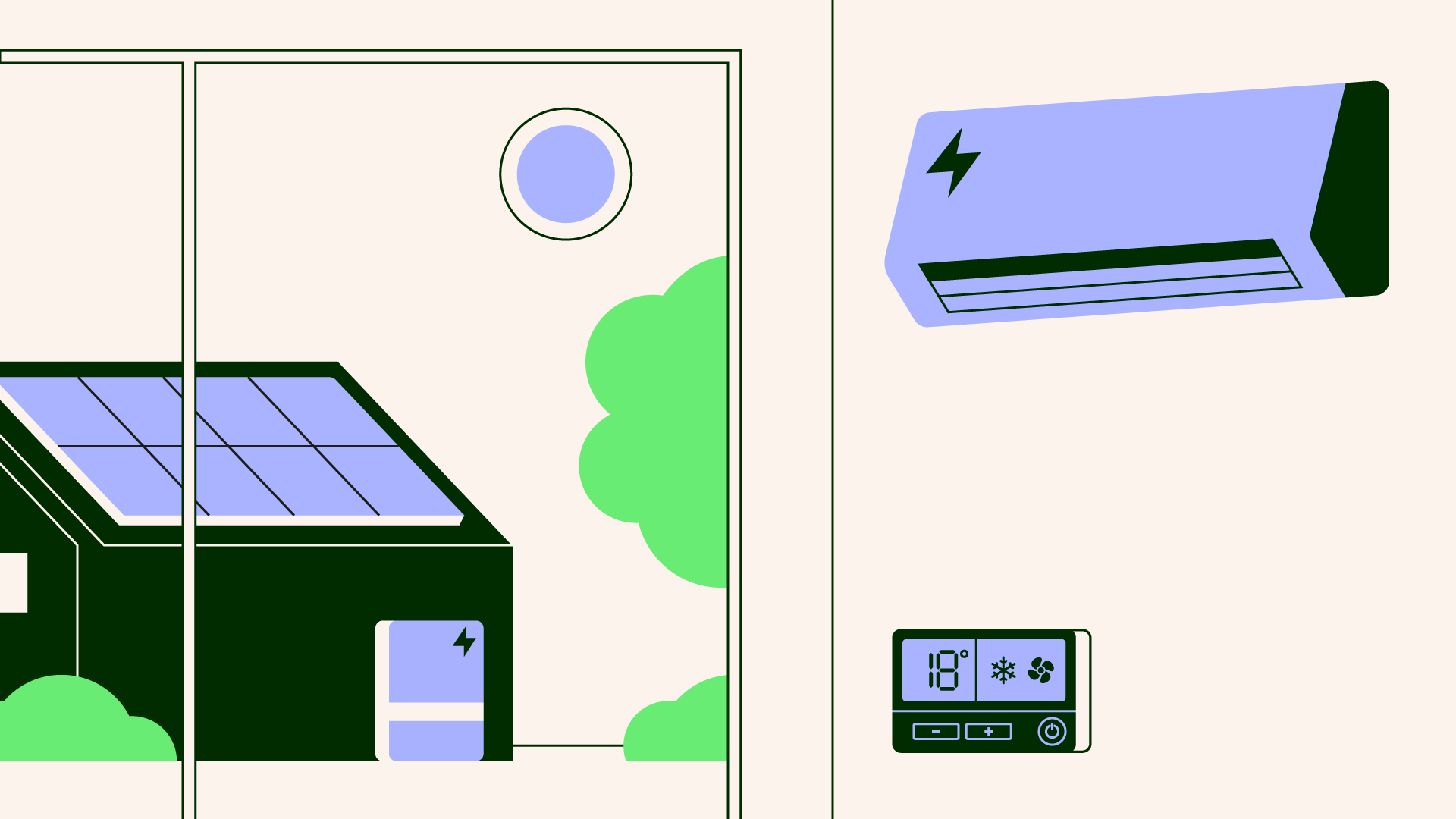 Where home batteries come in
Here's the thing about free power: it's only free for three hours. Most households use the most electricity in the evening, when prices are highest, peak rates can top 60c/kWh (RenewEconomy).
A home battery bridges that gap. It can soak up free midday power and run your home through the evening peak. That means you get the savings without rearranging your whole day.
Already have solar? Run the numbers before you switch. Compare your feed-in tariff, your self-consumption and the SSO's rates outside the window. If you're in a virtual power plant (VPP), check with your retailer whether the SSO works alongside it.
Thinking about adding a battery? The federal Cheaper Home Batteries Program can take a decent amount off the upfront cost.
The SSO tends to suit you if you:
The Solar Sharer Offer is a genuinely good deal - if you can move your usage to the middle of the day. Pair it with solar and a battery, and you can make the most of cheap daytime power around the clock.