

Australia's home batteries are quietly teaming up to keep the lights on. Here's what a virtual power plant (VPP) actually is, and whether joining one is worth it for your home.A new kind of power station is taking shape in Australia. It's spread across hundreds of thousands of rooftops and garage walls.
More than 500,000 home batteries have gone in since the federal Cheaper Home Batteries Program launched in July 2025, with around 2,000 more installed every working day.¹ While each battery helps to power a single home, together they can operate as one coordinated energy resource known as a virtual power plant, or VPP.
Our grid has a timing problem. Solar floods it with cheap power in the middle of the day. Then the sun sets, everyone gets home, the oven and air con go on, and demand spikes. That evening peak is when electricity is most expensive to supply and when the grid is under the most strain.
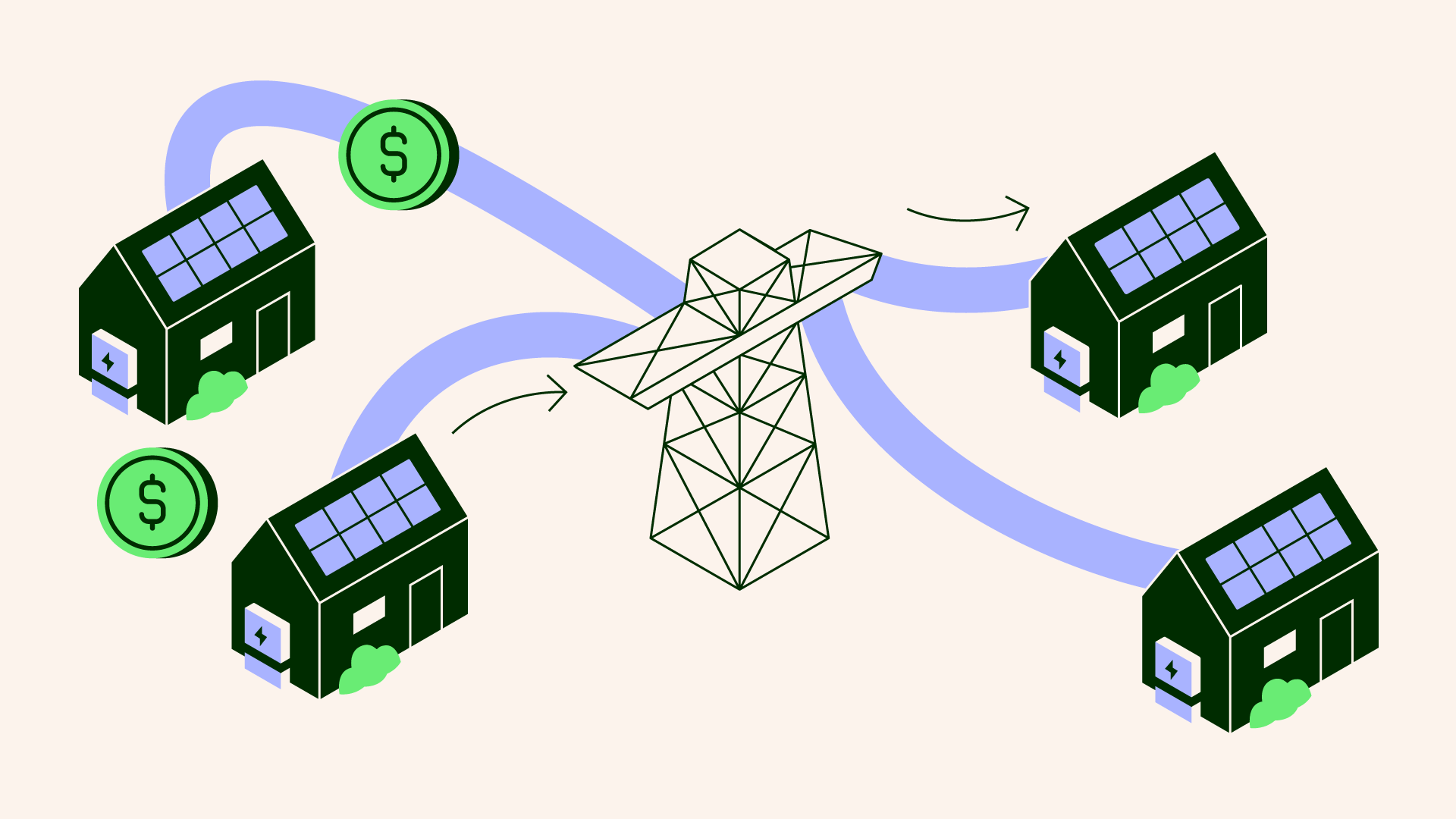
Batteries soak up the midday sunshine via solar panels and use this stored energy to help power homes in the evening. A VPP takes that one step further: it coordinates thousands of batteries so they can respond together with energy when the grid needs help, during a heatwave or when a big generator goes offline.
This is a big deal for future energy planning. The Australian Energy Market Operator (AEMO) is forecasting that 53% of battery owners will join a VPP by 2050, which would avoid billions in extra generation and network spending.²
Think of it like a carpool for electrons.
You keep using your battery as normal. It stores your solar and powers your home at night.
An operator (usually your electricity retailer) connects to your battery via its inverter and the internet.
When the grid is under pressure or prices spike, the operator sends a signal. Your battery, along with thousands of others, discharges some stored energy into the grid.
You get paid through sign-up credits, bill credits, payments per kWh, or a better feed-in rate.
Most of the time you won't notice a thing. Events are usually short and capped.
The latest numbers are encouraging. The ACCC's inquiry into the National Electricity Market found that in 2025-26, solar & battery households had median annual bills $329 to $909 lower than regular customers. Households that were part of a VPP did better again, with bills $762 to $1,093 lower.³
There are two important factors to consider here. Firstly, those results are based on averages, and your own result would depend on your system, usage and plan. Secondly, VPP households may differ from average battery owners in other ways too. With all that in mind, the benefits are still clear.
What might surprise you is that only 24% of battery owners have joined a VPP.³ For many households, maintaining full control over the battery they've invested in feels like the safest choice. That's why it's important to compare VPP offers carefully and understand exactly how your battery may be used.
The checklist is short:
NSW bonus: NSW households can claim a one-off incentive under the Peak Demand Reduction Scheme for connecting a battery to an approved VPP. From 1 July 2026, batteries up to 50 kWh qualify, with the payment calculated on up to 28 kWh of usable capacity.⁵ You can stack this with the federal discount. See our rebates and incentives page for what applies in your state.
Not all VPPs are created equal. The ACCC has warned that joining a VPP means handing over control of your battery to an operator, so make sure read the fine print.⁶ Here's what to check:
1. The total dollar value for the VPP offer, not just the headline. Offers mix sign-up credits (often $100 to $500), monthly credits and payments of around $1 per kWh for energy used in events.⁷ Add these amounts up over a year to work out if an offer suits you.
2. The electricity plan attached. Many VPPs lock you into that retailer's plan. A juicy credit isn't worth much if the usage rates or feed-in tariff are worse. Compare the whole bill, not just the VPP offer.
3. How much control you give up. Check:
4. Your backup reserve. If blackout protection matters to you, find out the minimum charge the operator must leave in your battery. Some programs keep 10% or 20% in reserve. Confirm this before you sign.⁸
5. Contract length and exit fees. Many offers have no lock-in, but some run for years. Check if you can leave without a penalty.
6. Battery wear and warranty. Extra cycling from VPP participation can add wear. Check that VPP use won't affect your manufacturer warranty, and look for daily cycle limits.
7. Battery compatibility. "VPP-capable" isn't tightly defined, and some batteries only work with certain platforms.⁹ Check which VPPs accept your brand before you buy the battery, not after.
8. Transparency. Will you get an app that shows when events happen and what you earned? You should be able to see what your battery is doing and keep track of what you're earning.
A VPP can turn your battery from a quiet money-saver into an active earner, whilst helping to keep the grid stable on its hardest days. It's not one-size-fits-all, though. The right VPP offer pays fairly, protects your backup, and lets you walk away if it stops suiting you.
The smartest move is planning for it from day one: choosing a battery that keeps your VPP options open. Explore our battery systems, read real customer savings stories, or get your free estimate and we'll walk you through it.